Digital Engagement in Banking: Managing the Cycle That Never Ends

UPDATED APRIL 2026
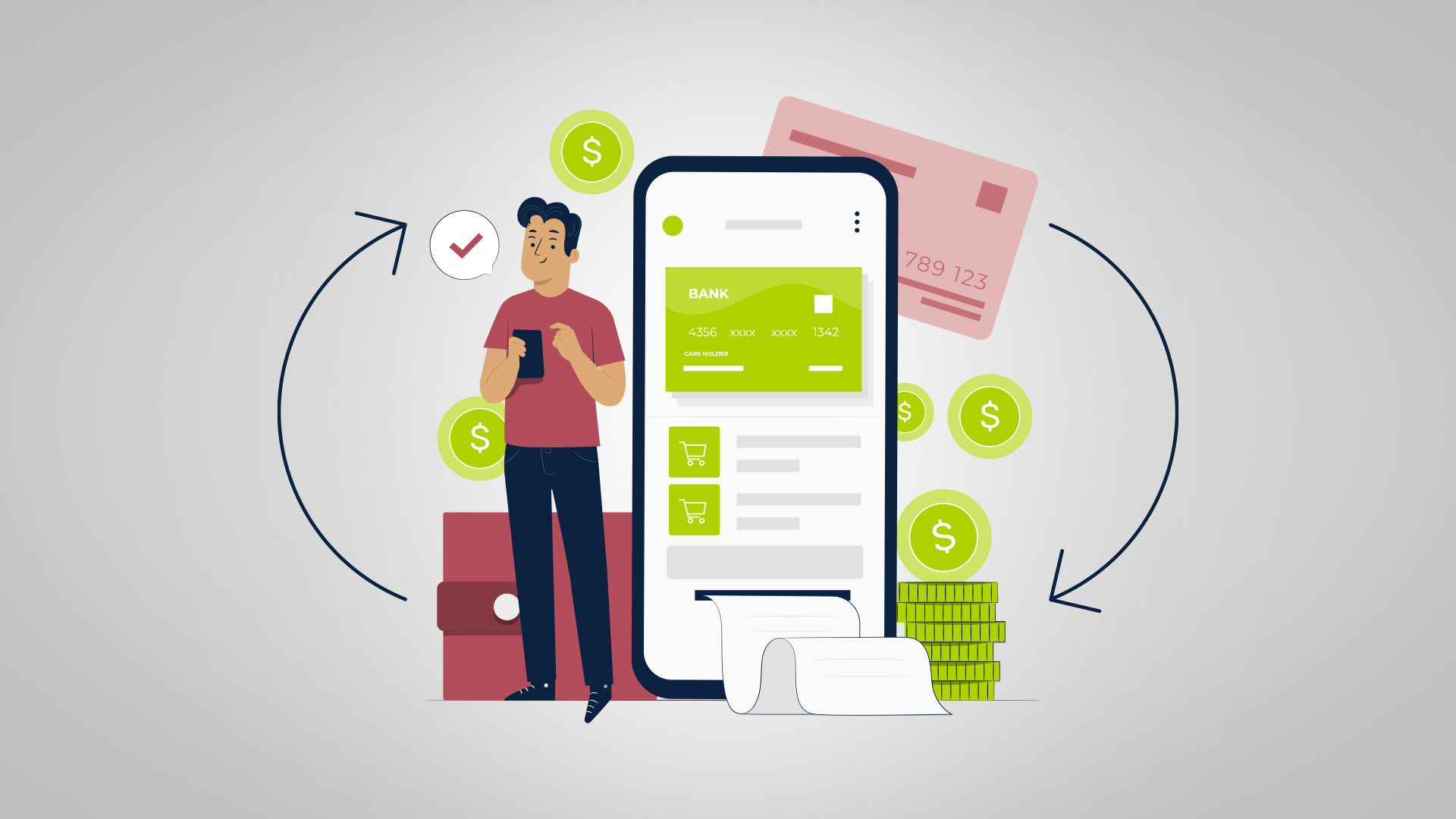
Digital engagement in banking is a continuous lifecycle that requires ongoing attention at every stage. With 77% of consumers now preferring to manage their accounts through mobile or computer, and digital banks capturing 44% of new checking accounts, traditional institutions need a digital strategy that covers every stage of the customer relationship. That means targeted awareness campaigns with tailored messaging, landing pages built for conversion, account opening experiences that minimize friction, onboarding sequences that start immediately, and ongoing personalized engagement powered by first-party data. The institutions that treat this as an ongoing cycle outperform the ones that treat it as a checklist.
When it comes to overused phrases, “the possibilities are endless” ranks pretty high. However, for anyone talking about digital engagement for financial services the phrase isn’t hyperbole. If you’re aiming to deliver an end-to-end digital experience for your customers, you already know it means thinking of everything. It also means continuously analyzing and optimizing all of it. Which is why a great end-to-end digital engagement strategy includes basically everything except for one thing: an end.
The stakes have gotten higher since we first wrote about this topic. The ABA’s 2025 consumer survey found that 77% of consumers prefer managing their bank accounts through a mobile app or computer. Only 18% still favor visiting a branch as their primary banking method. For banks and credit unions, digital engagement has become the relationship itself.
The Core Principles of Digital Engagement in Banking
Before we get into the details, let’s address the core principles behind every digital engagement decision your institution makes.
- Personalized experience. Customers expect you to use what you know about them to make their experience better, not generic.
- Ease and convenience. If it takes more effort to do something digitally than it does in a branch, you’ve missed the point.
- Precisely meeting expectations. Give customers what they came for without making them wade through everything else.
When companies lose sight of these pillars, that is when they lose sight of the customers’ needs.
The Digital Engagement Customer Life Cycle
A banking relationship moves through several stages: awareness, initial consideration, account opening, onboarding, and ongoing engagement. We’ll walk through each stage and the digital tactics that could work at each one. Plus, we’ll cover what to keep in mind so your focus stays on the customer as you build out your digital strategy.
This should be thought of as a never-ending process. No matter how engrained a customer becomes in your offering, you still have to cultivate the relationship. Satisfaction doesn’t maintain itself.
Awareness of Offering
The way people discover financial institutions has changed considerably over the past few years. Digital account openings have grown steadily, and according to Cornerstone Advisors’ 2025 Digital Banking Performance Metrics report, digital banks and fintechs now capture 44% of all new checking accounts. Community banks and credit unions combined account for just 9%. That’s a wake-up call for any institution that’s still relying primarily on branch foot traffic to generate new relationships.
This makes it more important than ever for banks and credit unions to have a sound digital strategy. Simply driving awareness of your offering through your digital channels isn’t going to cut it. A sound digital strategy will drive online account openings. Providing the option to open an account online is table stakes. What matters more is delivering a great experience for users who do so and having a marketing strategy geared for the right mix of awareness and conversion.
Targeting strategy
Your targeting strategy is where this starts. You need to know who you’re going after and where they spend their time online. With 78% of adults aged 18–34 using mobile banking as their primary method, younger audiences are going to be found on different platforms and respond to different messages than older demographics. Mapping out your audience segments and building campaigns around each one is the foundation for everything that follows.
Custom messaging
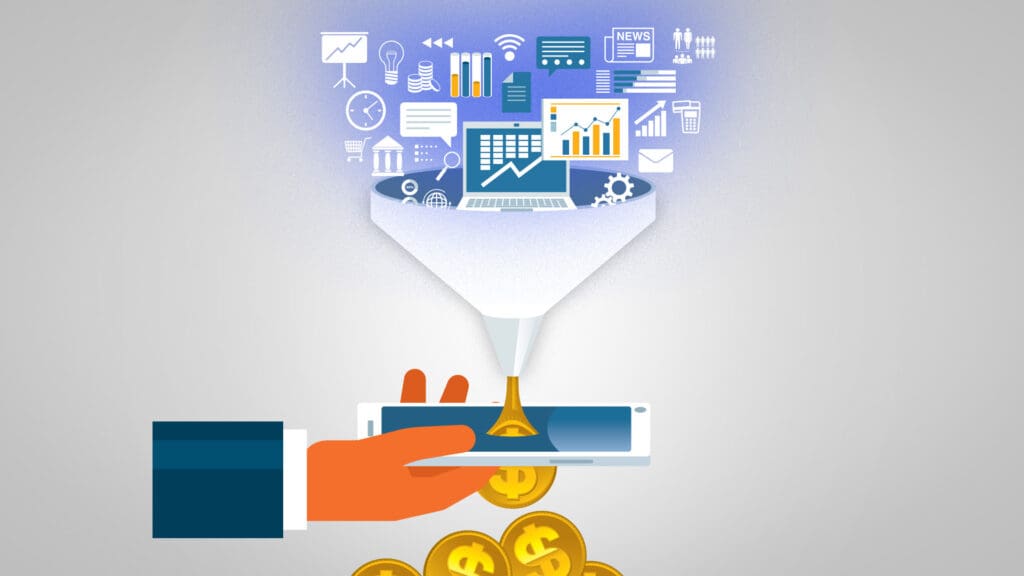
Once your targeting strategy is ironed out, the next thing to address is that there’s no reason that your tailoring of experience should end with targeting. Sure, it’s great to target users who are most likely to open an account due to being mid-funnel and having the right demographic or behavioral profile. However, the added benefit of targeting this precisely is that you can customize your creative and messaging by audience segment.
Using video content in your digital channels that is tailored by audience segment can make your marketing efforts feel much more humanizing and appealing. Testimonial videos of demographically appropriate existing customers speaking to the product offerings that are the most appealing to the audience segment you are targeting will make your outreach more relatable. It also gets the relationship off on the right foot by delivering a personalized experience at an early touchpoint.
One of the most difficult dynamics about this step is the constantly evolving data regulations for advertisers using data that isn’t first-party. Third-party cookies have been deprecated, privacy regulations keep tightening, and the targeting landscape looks different than it did even two years ago. This is one of the reasons it pays to have a knowledgeable financial services marketing agency partner to help navigate these waters.
Initial Consideration
Once your audience is aware of your offering, they will begin the initial consideration phase. This phase won’t look exactly the same for every audience member, but if you’re using a digitally driven strategy, then having an effective landing page is a must. Make sure each of the below considerations are taken into account for the product offering page that you’re driving traffic to.
Relevant
The page needs to be relevant to the offering and should tie back to your outreach materials from both a visual and messaging perspective. This allows the user to immediately feel confident that they’ve landed on a page that will fulfill what they set out to do when they clicked through. This will help keep your bounce rate low.
Digestible
This aligns with the “precisely meeting expectation” pillar. It’s important to deliver the information or resources that the audience would expect, while reducing information that they don’t need. Video, content sliders, and expandable content blocks are all ways to reduce what the audience has to read while still giving them the option to learn more when they want to.
Tailored
Tailoring your outreach materials by audience segment is a great start, but if you can take that further by also tailoring the landing page for various audience segments, it completes the effect. You can use the same base content for each audience but swap out imagery based on the segment and consider prioritizing content and CTAs as well. (For example, you could give more emphasis to the mobile app for younger audiences or place the phone number in a more prominent spot on the page for older audiences.) If you want to take this to the next level, consider having customer testimonials that are segmented in the same manner as your media targeting.
Clear CTA
Make sure that you make it clear to the audience what their next step is. Keep in mind that it won’t be the same for everyone, and you can’t always control that. No matter how easy you make it for them to open an account online right then and there, some prospective new customers will want to do their own research. Offering customer reviews or testimonials on the page may help prevent some users from moving off-site to do their own research. Whether you’re focusing on new account acquisition or customer servicing, the call to action should always be obvious.
Active Evaluation
As mentioned in the previous section, no matter how amazing of an on-site experience you deliver, some prospective customers are simply averse to making decisions without extensive due diligence. Many organizations struggle with this step in the prospective customer’s journey because they have the mindset that they can’t control whether an individual leaves their site, and what they find online is also out of their control.
Making sure that your business is easy to find and that your online reputation is positive can be a challenge for businesses that are operating in a crowded marketplace. This is where your SEO strategy, Google Business Profile presence, and review management all come into play. The prospective customer who leaves your site to do their own research is going to search your name, read your reviews, and compare you to alternatives. What they find during that process will either bring them back or send them to a competitor.
Account Opening
This is where the rubber meets the road. If your digital account opening experience is clunky, slow, or confusing, everything you invested in awareness and consideration just went to waste. Cornerstone Advisors found that the average digital application abandonment rate more than doubled year over year in 2024, reaching 67%. That number should concern anyone who hasn’t audited their digital onboarding flow recently.
The best neobanks have set the bar here. Opening an account with Chime or SoFi takes minutes. No paperwork, no branch visit, no friction. Traditional institutions don’t have to match that experience exactly (you may have compliance requirements that add steps), but you do need to get as close as your regulatory environment allows.
A few things to keep in mind at this stage: minimize the number of fields in your application. Use identity verification technology to reduce manual questions, especially for younger applicants who may not have a mortgage or auto loan to verify against. Make sure the experience works well on mobile, since that’s where most of your younger prospects will be completing it. And test the process yourself. If you wouldn’t want to sit through it, your prospective customers won’t either.
Onboarding
Getting a new customer to open an account is one thing. Getting them to use it is another. The onboarding phase is where a lot of institutions drop the ball. A new customer who opens an account and then doesn’t hear from you for two weeks is a customer who’s already forgetting you exist.
A strong onboarding sequence should start immediately after the account is opened. Welcome the customer. Walk them through the features that are most relevant to their account type. Help them set up direct deposit, enroll in eStatements, and download the mobile app if they haven’t already. Each of these actions deepens their engagement with your institution and makes it harder for them to drift toward a competitor.
This is also a good time to set the tone for the kind of relationship you want to have with the customer. If your institution prides itself on being a trusted advisor (and most do), then onboarding is where you start proving it. Offer a financial wellness resource, suggest a budgeting tool, or connect them with a banker who can help them think through their goals. The first few weeks of a new banking relationship set the trajectory for everything that follows.
New Customer Orientation
New customer orientation is a critical component of the relationship, as it can have a dramatic impact on both customer satisfaction and the value that the institution derives from the relationship. There’s a wide array of ways to do this in digital form that are both effective and convenient for the customer. However, there are a few key rules of thumb to keep in mind.
Materials should be tailored
If a customer begins reviewing orientation materials and realizes that they’re full of general boiler-plate guidance rather than specifics about the type of account they opened, they’re less likely to stay engaged with the content. Furthermore, even if they are engaged, the material itself is likely less effective due to not being specific. As with the example in the previous section of a video that thanks the customer for opening their account and then walks them through how to use it, this experience delivers a wow factor by being in video form, yet still tailored to the situation.
This delivers a great experience for the customer while also showing appreciation for them and providing them with the information needed to best use your offerings. As the financial institution, you will be rewarded by having a customer that’s more loyal than they would have been otherwise, and also one that’s likely more valuable to you because they know how to use your offerings in the manner that you intended.
Easy to use
New customer orientation shouldn’t feel like a burden. If it does feel overly cumbersome, then customers won’t complete it. This gets the relationship off on a bad foot right out of the gate and is also likely to cause future frustrations due to the customer not being educated on the specifics of their account.
Precisely meeting expectations
This is an easy objective for companies to overlook while trying to think of every possible thing a customer might want to know (or every product you offer that you would like them to use). Focus on giving them exactly what they need in a concise manner. Support that with links and user-friendly navigation to related topics that they might want to learn more about.
Ongoing Support
It’s no secret that customer satisfaction is a key ingredient for financial institutions. What’s important to keep in mind, though, is that many customers don’t really think about your customer service until they suddenly have a problem, and then how that problem is handled in that very instance immediately shapes their entire perception of how your organization supports its customers.
Strive for consistency
Why is that important? For starters, it stresses the need for consistency. Many institutions love to champion that one unbelievable customer experience story that gets posted on the bulletin board and the CEO shares during a board meeting, but the reality is that customer satisfaction is really driven by consistent repeatable experiences.
Most customers don’t expect you to blow them away with a single, over-the-top experience. What they don’t want is for a problem to arise and spiral into a situation that takes up their time. It only takes one bad experience for a customer to take their business elsewhere. Companies that deliver great customer experience on a regular basis are rewarded with high retention rates. JD Power’s 2025 study found that 85% of customers who experienced a problem had it resolved, and banks that resolved problems within one day saw significantly higher satisfaction scores. The correlation between customer satisfaction and deposit growth holds true year after year.
Analysis and Optimization
Maintaining a disciplined feedback loop is essential for having transparency into how you’re performing when it comes to digital customer engagement. Since we are talking about digital engagement, it’s easy to jump to analytics, but regardless of whether you’re monitoring customer engagement in person or on the web, a healthy mix of data analytics with qualitative customer inputs is necessary to have a clear view of the big picture.
Audience subsets
Speaking of the big picture, don’t forget to also drill down to specific subsets of your audience to see how you’re performing with various groups. Your overall satisfaction could be high across every measure when looking at your full audience, but you could be falling perilously short in a measure that’s critical to a specific subset of your customer base.
Data prioritization
Lastly, be sure to prioritize the data that you compile. Any measures that relate to how easy (or difficult) you make things on your customers should be top of mind when it comes to analysis. Taking this a step further, always be on the lookout for any small ways you can save your customers’ time when you’re analyzing operations and looking for areas to improve.
Of course, deriving value for you and your customers is important, but saving customers a little bit of time here and there is often lower-hanging fruit that can have significant benefits. The one experience that causes a customer to leave their financial institution is frequently caused by or worsened by an action that absorbs a disproportionate amount of the customer’s time.
Cross-Selling
While the upside of effective cross-selling is quite obvious, it’s also important to be mindful that when done poorly, cross-selling can lead to a negative customer experience. Research has consistently shown that customers who are exposed to cross-selling are more critical of the account-opening experience than customers who aren’t exposed to it.
The other factor to keep in mind is that the general public is more aware than ever before of what data companies have on them. If your cross-selling attempts aren’t relevant to the customer because you are not using the first-party data that’s at your disposal, then this can prove to be an agitating realization for the customer.
Many organizations are guilty of having more refined targeting using third-party data when marketing to prospective customers than when they’re cross-selling to existing customers due to inadequate use of first-party data. Put yourself in the shoes of a customer experiencing that dynamic and imagine how it would make you feel. You would feel like the organization was willing to put much more effort into acquiring you as a customer than they were willing to spend in making sure that they save you time after you’re already a customer. Needless to say, this is how no organization would want their customers to feel.
Using first-party data to both tailor the products you pitch in cross-selling efforts and to personalize your messaging will make your cross-selling efforts more fruitful for you and more beneficial to your audience while also humanizing the experience.
Avoiding Pitfalls
Digital engagement in banking really is a never-ending quest for excellence. Every step of the journey should deliver a personalized experience that demonstrates a real effort to save your customers time. Of course, this is much easier said than done. All organizations are going to experience growing pains during their shift toward putting more emphasis on digital customer experience.
The key is to be alert to those stumbles as they happen and have a process in place to analyze and optimize the experience you’re delivering. Many organizations go into this process with the leadership, knowledge, and great intentions needed to make it a success, but they still struggle with the challenges of digital engagement due to being too deep in the weeds. This is where it can help to have strong outside counsel in the form of knowledgeable vendor partners and a marketing agency with financial services expertise.
The Cycle Continues
That’s the nature of digital engagement in banking. There’s no finish line. The institutions that get this right are the ones that treat every stage of the lifecycle as an ongoing investment. The cycle keeps going because your customers’ needs keep changing, and the banks that stay engaged through those changes are the ones that keep the relationship.
Need Help Building Your Digital Engagement Strategy?
If your digital engagement could use a fresh set of eyes, or if you know there are gaps in your customer lifecycle but aren’t sure where to start, PriceWeber can help you map it out.
Or call us at 502-499-4209.
KEY TAKEAWAYS
- 77% of consumers now prefer managing their bank accounts digitally, and only 18% still favor branch visits as their primary method.
- Digital banks and fintechs captured 44% of new checking accounts in 2024, while community banks and credit unions combined accounted for just 9%.
- The average digital application abandonment rate reached 67% in 2024, meaning institutions that haven’t audited their account opening flow are losing prospects at the finish line.
- Nearly half of banking consumers said their institution could be doing more to anticipate their financial needs, a gap that first-party data can help close.
- The average retail bank customer now maintains three deposit accounts at different institutions, making ongoing engagement and retention more important than ever.
- Onboarding sets the trajectory for the entire relationship; customers who don’t hear from you in the first two weeks after opening an account are already drifting.
Our Articles Delivered
Signup to receive our latest articles right in your inbox.