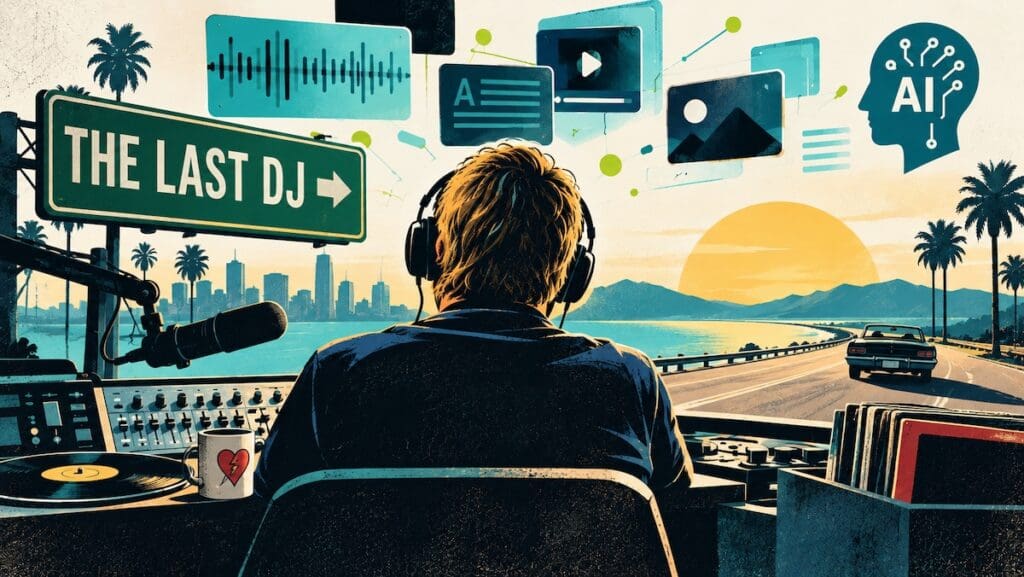

As competent digital content gets cheaper and more abundant, marketers should expect to pay a premium for what remains scarce: people’s time, attention and presence.
The scarcest thing in marketing right now is a room.
Last month I watched a brand team scroll their own category on someone’s phone. Post after post, all of it clean and competent, and not one bit of it memorable. One of them said it out loud:
“I can’t tell any of us apart.”
That is the whole problem in a sentence (a very scary sentence when you stop to think about it).
Making competent digital content used to require time, money and talent. Increasingly, it requires a prompt. A 2025 Ahrefs study found AI in roughly 74% of new web pages, and analysts expect that share to keep growing.
That does not make good digital content worthless. It makes being merely good at it a lot less valuable.
So you might expect marketing dollars to keep chasing the cheapest, most scalable ways to produce more. They are also moving in the opposite direction. Global spending on experiential marketing reached about $139 billion in 2025, up more than 8% in a year, and 84% of consumer marketers say they will spend more on live events in 2026.
The least scalable thing in marketing, a real room with real people, is commanding a premium.
That makes sense when you think about what has become scarce. Content isn’t scarce anymore. Neither is reach. Attention is.
A feed trains your thumb to keep moving. A room asks you to stay.
Think of digital content as currency being printed around the clock. Every new piece adds to the supply and makes it harder for the next one to feel distinctive. An in-person experience works differently. You cannot manufacture someone’s undivided attention on a laptop at midnight.
Digital still matters, of course. Use it to reach people, stay present and give them a reason to care. But when the moment matters enough to justify it, give people something they cannot scroll past.
For a health system, that could mean a genuinely useful community event. For a bank, it might be an honest conversation about a difficult financial decision. The format matters less than the constraint: someone’s time and presence have to be earned.
That also means we need to measure these experiences differently. A room holds a few hundred people, not a few million. If you judge it by click-through rate, you will undersell it every time. Look instead at the attention it earns today and the relationships that show up in your pipeline later.
Here is the shift I would bet on. As competent digital content gets cheaper and more abundant, marketers should expect to pay a premium for what remains scarce: people’s time, attention and presence.
So when you look at your next marketing plan, ask yourself one question:
Who do we want in the room?
The Signal
Experiential marketing is moving against the economics of everything else.
Global experiential marketing spending reached roughly $139 billion in 2025, up more than 8% in a year. And 84% of consumer marketers say they expect to increase live-event spending in 2026.
At the same time technology is making one side of marketing dramatically cheaper and easier to scale, brands are putting more money into something stubbornly expensive and difficult to scale.
I don’t think that’s a coincidence.
Let Me Hear From You!
Tell me what you think, did it spark any ideas for you? Do you disagree and care to share a different perspective? Whatever it is, I’m here for it, let me know what’s on your mind and as always, happy to compare notes about marketing challenges!
Our Articles Delivered
Signup to receive our latest articles right in your inbox.